Web development has undergone a significant transformation over the past decade. With the rise of artificial intelligence (AI) and automation, developers and designers are experiencing a shift in how websites are created, optimised, and maintained. AI-powered tools are enabling faster, more efficient workflows, improving user experiences, and making modern website development more accessible and efficient for businesses. Here, we explore how AI is shaping the future of web development and what businesses need to know to stay ahead.
AI-Powered Web Design: Transforming Creativity and Efficiency
1. AI-Generated Design Assistants
AI-driven design tools like Figma AI plugins, and Adobe Sensei are revolutionising the way websites are designed. These tools can analyse user preferences, generate layouts, and suggest color schemes, typography, and imagery based on data-driven insights. This automation allows designers to focus on creative decisions while AI handles repetitive tasks.
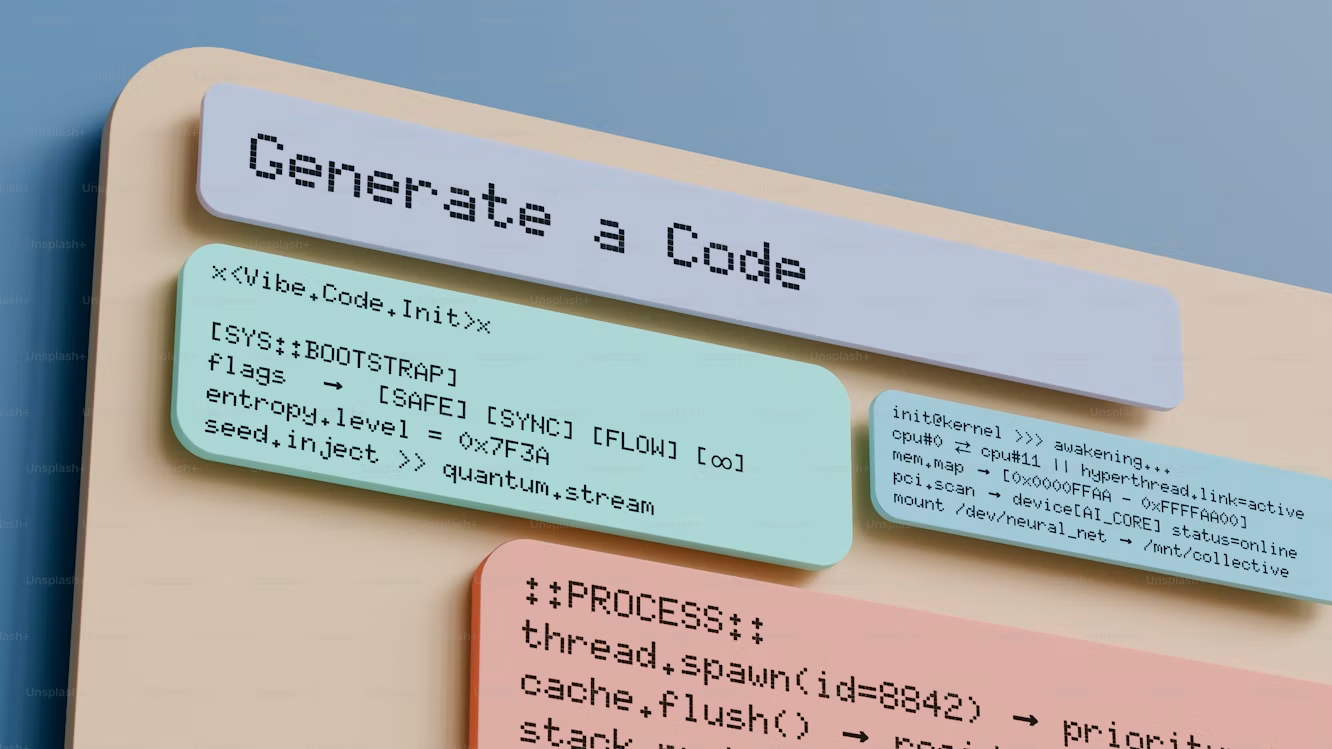
2. Automated Code Generation
Developers can now use AI-powered code generation tools like GitHub Copilot and Tabnine to write code faster and with fewer errors. These tools can assist with repetitive development tasks, but human developers remain essential for architecture, security, testing, and business-specific functionality. For projects that require complex workflows, integrations, or application functionality, custom software development can provide a more flexible foundation.
3. AI-Driven UX/UI Enhancements
AI helps optimise user experiences by analysing behavioural data and making real-time adjustments. Combined with thoughtful UX/UI design, these insights can help businesses create more intuitive websites, improve user journeys, and make digital experiences more relevant to their target audiences.