As businesses become more dependent on digital platforms, protecting your website and user data has become crucial. While AI brings innovative solutions for defending against threats, it also introduces new risks. In this article, we’ll explore how AI impacts cybersecurity, common AI-powered cyber threats, best practices for securing your website, and the role of blockchain in cybersecurity.

AI for Threat Detection and Cybersecurity Automation
AI is revolutionising the way we detect and respond to cyber threats. It helps computers understand patterns in data and respond faster than humans can. Here’s how AI is used in cybersecurity :

1. Anomaly Detection
For example, you run an online store, and suddenly, you notice a large number of login attempts from unusual locations. Here, AI systems can instantly detect this and flag it as suspicious. The system can then block these IP addresses before any damage is done.
Check out- AI threat detection tools like Darktrace for more details on anomaly detection.
2. Automated Responses
If a hacker tries to access sensitive customer data, AI can automatically block their access by shutting down the compromised system, all without needing a human to intervene. This quick response helps prevent data breaches.
Check out AI-based cybersecurity platform SentinelOne to learn more about automated response and its features.
3. Predictive Analysis
Think of AI as a weather forecaster for cybersecurity. Just as weather forecasters predict storms based on patterns, AI predicts cyber threats by analysing past attack data. If AI notices certain patterns, it can predict when and where the next attack might happen, allowing your security system to prepare in advance.
Learn more about predictive AI security solutions on CrowdStrike.
This is what Common AI-Powered Cyber Threats look like !
While AI improves security, it also enables new types of cyber-attacks. Let’s look at some of these AI-driven threats :
1. Deepfakes
Imagine seeing a video of a company CEO making an announcement, but it’s actually an AI-generated fake. Cybercriminals use deepfakes to create realistic videos or audio recordings of people saying things they never did. This could be used to trick people into transferring money or sharing sensitive information.
2. Automated Phishing Attacks
Have you ever received an email that looks like it’s from your bank asking you to click a link and confirm your account details? AI allows cybercriminals to create phishing emails that are even more convincing, making it harder to tell they’re fraudulent. These emails can be personalised with your name and other details, making it more likely you’ll click the malicious link.
3. AI Malware
Just like a virus that learns to resist medicine, AI-powered malware can adapt to avoid being detected by security programs. For example, if one part of the malware is detected and blocked, AI might modify it and try a different approach to get through.
Explore AI-based malware detection tools like Cylance for more.

Best Practices for Securing a Website Using AI
Here are some steps businesses can take to secure their website using AI-based tools and solutions:
1. AI-Powered Firewalls
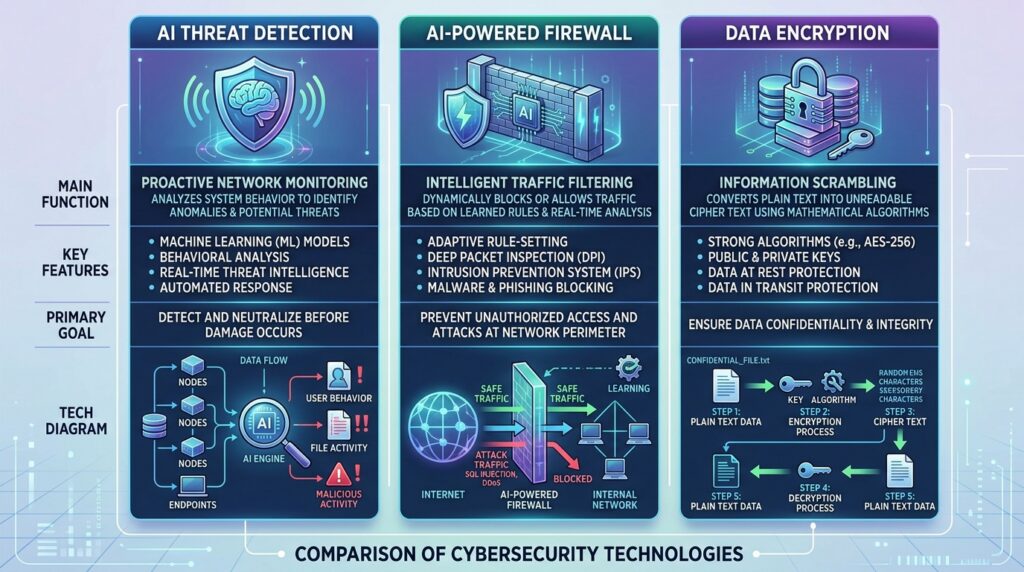
Think of a firewall as a security guard at the entrance of your website. AI-powered firewalls can instantly recognise and block harmful traffic trying to access your website, like malicious bots or hackers. These AI tools analyse traffic patterns and block suspicious activity, all in real-time.
Discover how Cloudflare’s AI-powered firewall protects your website in real-time.
2. AI-Based Authentication
Imagine trying to log in to your online bank account. AI can recognise if you’re logging in from a new device and ask you to confirm your identity. If something seems off, AI may trigger extra layers of security like a text message verification or facial recognition, making it harder for hackers to impersonate you.
Learn more about AI-based authentication solutions from Okta.
3. Continuous Monitoring
Just like a security camera watches over a store, AI-powered monitoring tools continuously keep an eye on your website’s activity. If anything suspicious happens (like an unusually large data download), the AI alerts the security team and may even automatically block the threat.
Explore AI-based website monitoring services like SiteLock.
4. AI for Data Encryption
Encryption is like putting sensitive data in a secure box. AI tools can enhance encryption algorithms, making it even harder for cybercriminals to steal or tamper with data as it moves through the internet.
Learn about AI-enhanced encryption techniques at Vormetric.